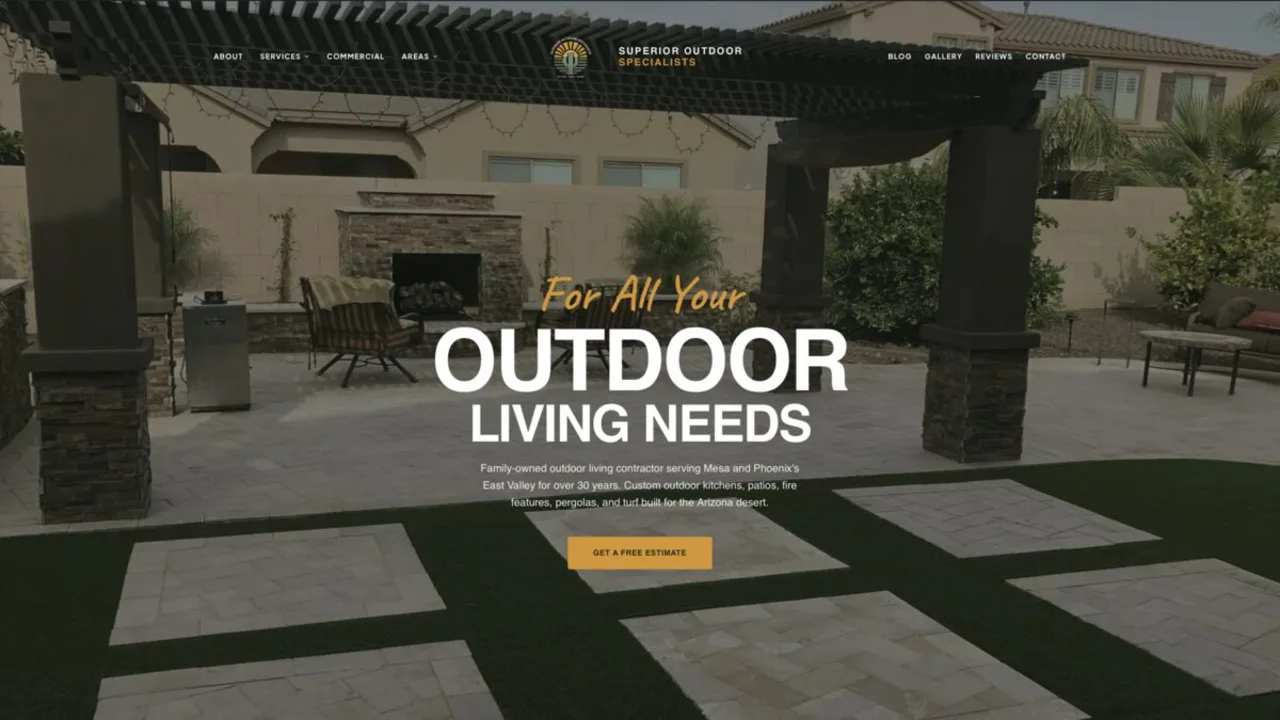
Outdoor Living Website
Superior Outdoor Specialists
A polished, mobile-friendly outdoor living website that presents East Valley services and guides homeowners toward an estimate.

Most local business websites have one generic page trying to rank for everything. That is not how Google works. The businesses that dominate local search have individual pages built around specific services and specific cities, each one loaded with the exact language their customers type when they are ready to hire.
A single page titled Roofing Services cannot compete with a page titled Roof Replacement in Pittsburgh PA and another titled Emergency Roof Repair Pittsburgh. Google reads each page as a standalone document and ranks it for the terms it is specifically about. When one page tries to cover every service in every city, it ends up ranking well for nothing. The fix is individual pages, one per service, one per area, each written with the keyword depth that earns a ranking.
A dedicated page for each service you offer, written around what customers actually search, is the foundation of local SEO. Roof repair in Pittsburgh. HVAC tune-up in Scottsdale. Pool plastering in Mesa. Each page targets the intent behind one search, answers the questions behind that search, and gives Google a clear reason to rank it. The more specific and keyword-rich each page is, the more traffic it earns, and the more of that traffic converts into calls because the visitor landed on exactly what they were looking for.
If you serve ten cities, you need ten area pages, each one written around local search terms for that city, not a copy-paste with the city name swapped out. A plumber who serves Mesa, Gilbert, Chandler, Tempe, and Scottsdale needs a page targeting plumber in Mesa, a separate page targeting plumber in Gilbert, and so on. Each page tells Google you are genuinely relevant to searches in that area. Businesses that build this structure show up across their whole service territory instead of only where their physical address sits.
The content on each service and area page needs to do two things: satisfy Google's ranking criteria and convince a real person to call. That means covering the service in enough depth that Google trusts the page as a relevant result, using the specific terms customers type at each stage of their search, and answering the questions that come up before someone decides to hire. A thin page with three paragraphs will not rank. A page that genuinely covers the service, the local context, and the common customer questions will.
Your Google Business Profile matters, especially for map pack rankings, and the reviews on it carry real weight both with Google and with customers deciding who to call. Profile optimization and management are handled through our Local SEO and Google Business Profile services, while this SEO service focuses on the website itself. A strong profile with consistent recent reviews works alongside the service and area pages we build, not instead of them. The organic rankings and the map presence feed each other.
A page that ranks keeps bringing calls month after month without a per-click cost. Ads stop the moment you stop paying. Building out a full library of service and area pages takes a few months to gain traction, but once those pages rank, they hold, and they keep working. The businesses starting this now are the ones that own their markets a year from now.
See Real Client Sites
See how Superior Outdoor Specialists, AZ Outside Living, and KTN Roofing use clear positioning, strong project imagery, local proof, and direct estimate paths to turn traffic into inquiries.
Outdoor Living Website
A polished, mobile-friendly outdoor living website that presents East Valley services and guides homeowners toward an estimate.
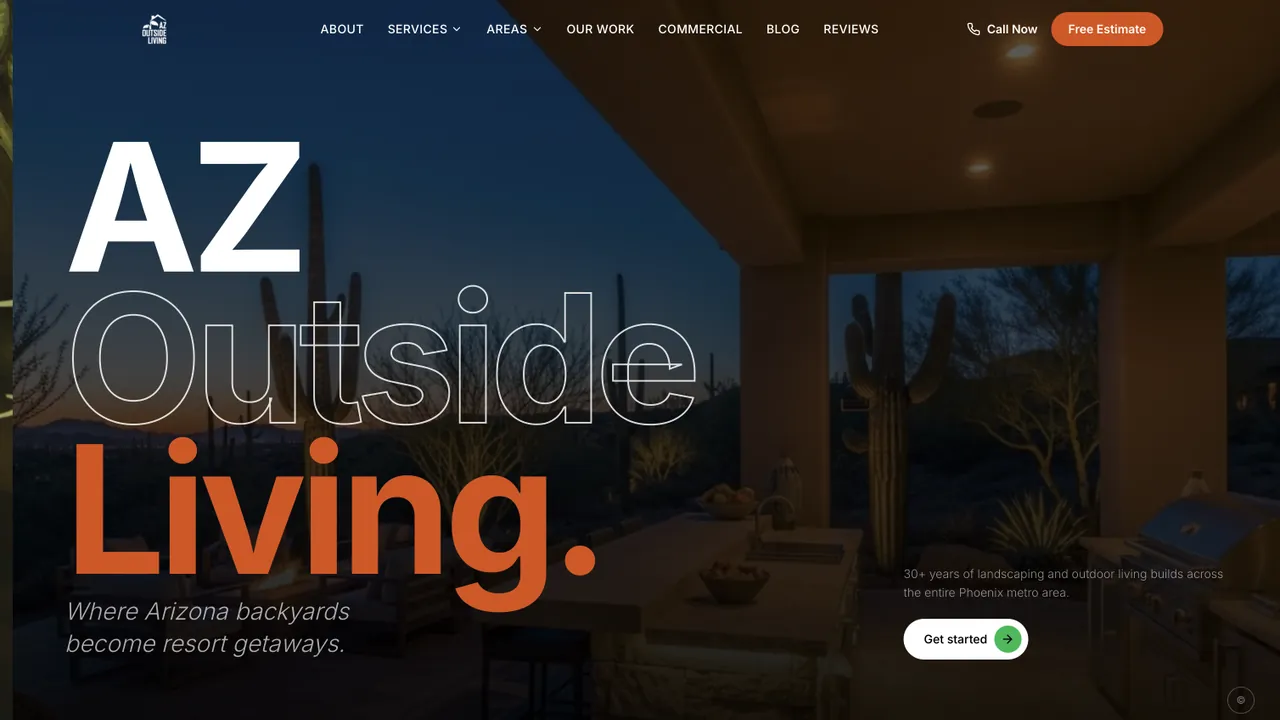
Landscaping & Outdoor Living Website
A visual, mobile-friendly website that presents landscaping and outdoor living across the Phoenix metro and makes requesting an estimate easy.
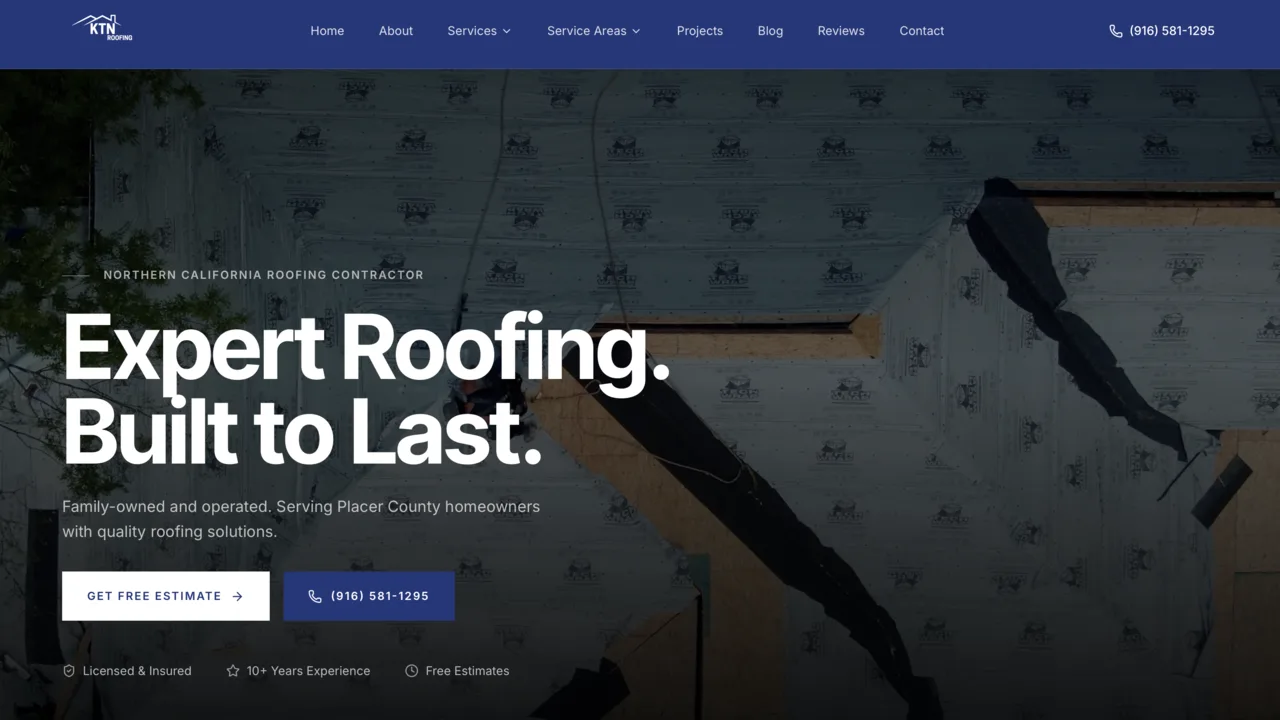
Roofing Website
A focused, mobile-friendly roofing site that builds local trust and makes requesting a free estimate or calling simple.
10-Day Money-Back Guarantee - Not happy with your site? Cancel within 10 days of launch and get every dollar back. No questions asked.